
S925 on Jewelry: A Sterling Silver Claim, Not Proof
The mark represents the piece as sterling silver, but it does not independently establish that the metal has been tested or that the stamp is accurate.
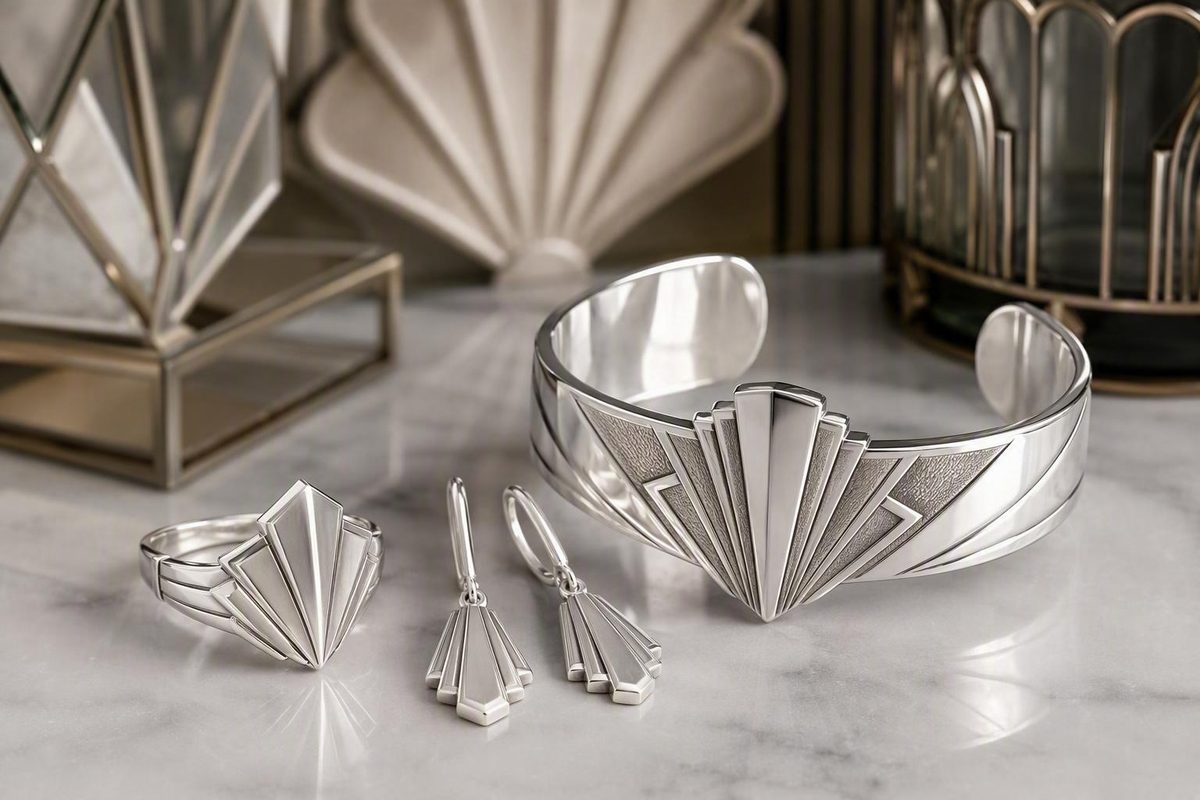
The short answer: S925 indicates sterling silver
S925 generally means that a piece of jewelry is represented as sterling silver: 92.5% silver and 7.5% other metals. The remaining portion is commonly copper, although the precise alloy can vary. The added metal gives the silver greater hardness, making it more practical for rings, chains, bracelets, earrings, and other frequently handled objects. A jewelry-material guide describes this composition and identifies common locations for the stamp.
In ordinary jewelry descriptions, S925, 925, .925, Sterling, and Ster commonly communicate the same nominal sterling-silver purity. They are different ways of expressing the material claim rather than names for fundamentally different grades of silver.
The prefix S should not be expanded with certainty. Some supplied sources interpret it as “silver,” while others say “sterling”; none establishes one interpretation as universally authoritative. Fortunately, the useful part of the mark is not in dispute: 925 communicates the claimed silver proportion.
Common places to inspect for the stamp include:
- The inside of a ring shank
- A necklace or bracelet clasp
- A small tag near a clasp
- The back of a pendant
- An earring post or back
- The underside or reverse of a larger piece
A loupe or magnifying glass and strong side lighting can help. Read the complete group of characters rather than treating a partial “92” or isolated “S” as a purity mark.
Most importantly, distinguish what S925 claims from what it proves. The mark represents the piece as sterling silver, but it does not independently establish that the metal has been tested or that the stamp is accurate.
S925 means “represented as sterling silver,” not “independently authenticated as sterling silver.”
That distinction matters most when a piece is expensive, its description is disputed, or its composition will affect appraisal, resale, repair, or restoration decisions.
Why sterling silver contains 92.5% silver instead of 100%
Fine silver is approximately 99.9% silver and may be identified by a 999 mark. It is softer and more susceptible to bending and scratching than sterling silver, which is alloyed for greater practical durability. This comparison explains the distinction between 999 fine silver and 925 sterling silver.
Alloying means combining silver with a smaller amount of one or more other metals. Copper is the alloying metal most often identified in the supplied evidence, but S925 does not disclose the complete recipe, and not every manufacturer necessarily uses an identical mixture.
The resulting increase in hardness is useful for components such as:
- Ring bands exposed to repeated knocks and pressure
- Chain links that rub against one another
- Clasps that are opened and closed regularly
- Prongs and bezels that must retain their form
- Hinges and articulated sections
- Thin decorative elements that could otherwise deform more easily
Sterling silver is not indestructible.
Nor does alloying make sterling silver “fake.” Sterling is a genuine silver alloy. The term alloy simply means that the material contains more than one metallic element. In jewelry, an alloy can offer a more useful balance of appearance, strength, and workability than maximum purity alone.
Fine silver and sterling silver therefore serve different purposes. Sterling is often more practical for conventional wearable jewelry, but it is not automatically superior in every design.
Because S925 identifies a claimed silver proportion rather than a complete formula, it should not be used to infer every metal present in the remaining alloy. If the exact composition matters, request specific material information from the manufacturer or seller.
S925 versus fine silver, silver plate, and gold-plated silver
The word silver may describe a metal, an alloy, a color, or a surface layer. Those meanings are not interchangeable. When assessing jewelry, ask two separate questions:
- What is the principal metal or alloy beneath the surface?
- Has a coating or decorative finish been applied over it?
The practical distinctions are summarized below. The stated sterling and fine-silver proportions, and the difference between sterling and silver plate, are reflected in a comparison of these materials. Sterling is described as a silver alloy, while silver plate is a thin silver layer over another metal.
| Material description | Claimed composition or construction | Typical visible surface | Key identification point |
|---|---|---|---|
| S925 or 925 sterling silver | 92.5% silver throughout the sterling-silver body, with 7.5% alloying metals | Usually silver colored, but it may be plated, oxidized, or otherwise finished | S925 describes the claimed underlying alloy, not necessarily the visible finish |
| 999 fine silver | Approximately 99.9% silver | Usually silver colored unless coated or specially finished | It has a higher silver proportion but is softer than sterling |
| Silver-plated jewelry | A surface layer of silver over another metal | Silver colored while the coating remains intact | The principal body is not sterling silver throughout |
| Gold-plated sterling silver | A sterling-silver body with a gold-colored coating | Gold colored until the coating wears or is removed | S925 can describe the silver base; it does not mean the item is solid gold |
The principal difference between sterling silver and silver plate is depth. In an S925 item that meets its mark, the main sterling-silver body has the claimed alloy throughout. Silver-plated jewelry instead has silver only at the surface, over a different underlying metal.
As plating wears, another color may appear beneath it. Silver-plated jewelry can still be attractive and well made, but its construction is materially different from an item made from sterling silver throughout.
Fine silver differs in another way. It contains a greater proportion of silver but is softer. A higher purity number does not automatically mean that the finished object is better designed, more durable, or more valuable. A substantial, carefully constructed sterling piece may be more practical in regular use than a fragile fine-silver design.
Gold-plated sterling silver shows why color alone cannot establish composition. A gold-colored ring may have a sterling-silver body beneath its coating. Conversely, a silver-colored object may be sterling, silver plate, or another white-colored metal. Appearance indicates the finish you can see; it does not prove what lies underneath.
Terms such as gold plated, gold filled, and vermeil should not be treated as interchangeable. They may describe different constructions or specifications. An S925 stamp alone does not establish the type, purity, thickness, or application method of a gold-colored coating.
What an S925 stamp does—and does not—prove
An S925 stamp gives you a useful working hypothesis: the maker or seller is presenting the item as sterling silver. It is not equivalent to an assay, laboratory report, or independent examination.
A purity stamp can be counterfeit, misleading, or applied to an object that does not meet the represented composition. Base-metal and plated jewelry can carry false 925 marks, and convincing lettering is not conclusive because a small stamp can be copied. Guidance on examining silver notes that counterfeit pieces may carry 925 stamps and recommends professional analysis when greater confidence is needed.
The mark addresses only claimed metal purity. By itself, it does not establish:
- The maker or workshop
- The date of manufacture
- The country of origin
- The stylistic period
- Whether the piece is handmade or machine made
- The standard of workmanship
- The history or quality of repairs
- Whether gemstones are natural, laboratory-grown, treated, or imitations
- Whether every component has the same composition
- The nature or thickness of any coating
- The item’s monetary value
Metal purity and product quality must be evaluated separately. A necklace may have a sterling body but an unreliable clasp. Replacement components may also differ from the main piece.
When examining a stamped item, consider the mark in context:
- Does the complete stamp appear legible and plausible?
- Are other marks present?
- Is the color consistent across the principal body?
- Do worn areas reveal another metal?
- Is a coating flaking or wearing through?
- Do the clasp, posts, settings, and links appear consistent?
- Does the seller provide a clear material description?
- Are receipts, prior test results, or other records available?
- Are the return terms suitable if the description proves inaccurate?
For an inexpensive piece, a plausible mark, consistent construction, and a trustworthy seller may provide adequate practical assurance. For a costly purchase, resale dispute, insurance question, or important inherited object, professional testing and documentation are more appropriate.
S925 should not be described as an unconditional international certification, a government guarantee, or proof that every marked item has been independently assayed. The stamp does not reveal who verified the metal, if anyone did.
Why gold-colored jewelry can still be marked S925
A gold-colored ring, chain, bracelet, or pair of earrings marked S925 is not necessarily contradictory. One possible construction is a sterling-silver body beneath a gold-colored surface coating.
Surface color and underlying composition are separate characteristics. Sterling silver may appear:
- Naturally silver colored
- Gold colored because of plating
- Darkened through intentional oxidation
- Covered by another white-colored finish
- Partly coated to create a two-tone effect
- Combined with enamel or another decorative material
An S925 stamp on a gold-colored piece does not indicate solid gold. It may describe the claimed sterling-silver base rather than the visible coating. If a sales description calls such an item “gold jewelry,” ask what construction is actually meant.
On a gold-plated sterling item, wear may expose the silver-colored material beneath. That possibility should be distinguished from a piece whose plating reveals an unrelated base metal.
Not every uneven color is plating loss. Visual inspection alone may not identify which explanation applies.
Likewise, do not use gold plated, gold filled, and vermeil as synonyms. S925 supplies no information about the gold purity, coating thickness, application method, or whether a particular trade description is appropriate.
If the coating affects the price, restoration plan, or resale description, request:
- A written description of the base metal
- The stated type of surface finish
- Any available coating specifications
- Care instructions for that finish
- Professional examination if the construction remains uncertain
Tarnish, darkening, and safe care for S925 jewelry
Genuine sterling silver can tarnish or darken through environmental exposure, including contact with sulfur-containing compounds, air, moisture, chlorine, and other chemicals. Tarnish is therefore compatible with genuine sterling silver, but it is not proof of authenticity. A sterling-silver guide describes tarnishing and recommends dry storage, reduced chemical exposure, and gentle polishing.
Several different conditions can alter a piece’s appearance:
- Worn plating: Loss of a coating that exposes a different-colored layer
- Residue: Soap, skin products, dirt, adhesive, or polishing compound on the surface
- Exposed underlying metal: Another alloy appearing where silver plating has worn away
- Repair discoloration: Solder or replacement components aging differently
- Intentional oxidation: A deliberately darkened finish used to emphasize a pattern or recess
These conditions are not interchangeable, so cleaning should begin with identification rather than aggression.
For routine handling and storage:
- Keep the piece dry. Dry it thoroughly before storage.
- Store pieces separately. A soft pouch or divided box can reduce scratching and tangling.
- Reduce chemical exposure. Avoid unnecessary contact with perfume, lotions, and harsh cleaning products.
- Remove jewelry before swimming. This limits exposure to chlorine and other pool chemicals.
- Use a suitable polishing cloth gently. Stop if the finish changes unexpectedly.
- Inspect the piece first. If stones or components appear loose, do not proceed with routine cleaning.
For plain, unplated sterling silver without vulnerable stones or special finishes, mild soap and water may be used as a gentle cleaning approach, followed by careful rinsing and thorough drying. A suitable silver-polishing cloth may help with light surface tarnish. The same material guide recommends mild soap and water or a polishing cloth for S925 jewelry.
Do not assume that directions for plain sterling apply to:
- Gold-plated or silver-plated pieces
- Gemstone-set jewelry
- Enamel
- Antique surfaces
- Intentionally oxidized silver
- Mixed-metal objects
- Previously repaired jewelry
- Unidentified coatings or finishes
When the construction is uncertain, stop at gentle dry handling and obtain item-specific advice from a competent jeweler or conservator. The aim is to preserve the jewelry, not simply to make it brighter.
How to check whether an S925 item is genuine
Authentication is best approached as a hierarchy. Begin with low-risk observations, review the transaction and documentation, treat household checks only as screening clues, and seek professional analysis when certainty matters.
1. Inspect the stamp and construction
Use magnification to locate and read the complete mark. Possible sterling descriptions include S925, 925, .925, Sterling, and Ster, but any of them can be copied. Record other marks exactly rather than guessing what they mean.
Then examine the object as a whole:
- Are the main body, links, clasp, posts, back, and settings consistent in color?
- Is another metal visible at worn edges?
- Is the surface flaking?
- Do any components appear to be replacements?
- Are repairs or solder seams visible?
- Does the seller’s description match the construction you can see?
This inspection may reveal contradictions, but sight alone cannot determine an exact metal composition.
2. Review seller information and documentation
A well-documented transaction provides more confidence than an isolated stamp. Consider the seller’s experience, material description, photographs, disclosures, return terms, and willingness to answer specific questions.
For a new piece, ask whether the seller can provide a written metal specification. For an older piece, retain receipts, appraisals, repair records, prior test results, labels, and packaging. Such records do not replace testing, but they help establish what was represented and by whom.
3. Treat nondestructive observations as screening clues
A magnet may identify some obvious mismatches. Strong attraction across the principal body suggests the presence of magnetic metal and warrants further investigation. However, a nonmagnetic result does not prove that the item is sterling silver.
Test separate components where practical. A clasp may contain a small magnetic steel spring even when the principal chain and clasp body are sterling silver.
Other popular checks include:
- Ice melting
- Odor
- Color and luster
- Apparent weight
- Temperature or feel
- Sound
- Rubbing with a cloth
- Looking for dark residue
- Comparing the price with similar pieces
These are preliminary observations, not authentication methods. A suspicious result may justify further examination; a reassuring result does not settle the question. An overview of household silver tests similarly distinguishes preliminary checks from stronger confirmation.
Neither can establish the metal’s precise purity.
4. Use professional analysis when certainty matters
Professional options identified in the supplied evidence include:
- Acid testing
- Electronic metal testing
- X-ray fluorescence analysis, usually abbreviated XRF
These methods can provide greater confidence than a stamp or household observation, but their usefulness depends on the item, the method, the part examined, the equipment, and informed interpretation. Professional acid, electronic, and XRF testing are among the methods identified for assessing silver.
An inexperienced owner should not casually perform acid testing. Ask a professional what method will be used, which parts will be examined, and whether the procedure may leave a mark.
Professional assessment is especially appropriate for:
- A valuable purchase
- A resale, refund, or description dispute
- An inherited item with uncertain provenance
- Jewelry represented as antique or designer made
- A piece containing valuable or vulnerable gemstones
- A plated item whose underlying metal matters
- A large lot being inventoried
- An insurance or estate assessment
- Any object that could be harmed by an unsuitable home test
The goal is not merely to produce a reading, but to understand what that reading says about the entire object.
Does S925 mean good quality or high value?
S925 is a claimed metal-purity designation, not an overall quality grade. It does not determine how skillfully a piece was designed, cast, fabricated, set, polished, repaired, or maintained.
Two genuine sterling-silver rings may differ substantially. One may have a heavy, well-finished shank and secure setting; another may be thin, porous, rough, or badly worn. Both can make the same nominal purity claim. Likewise, two S925 chains may differ in link construction, clasp reliability, finish, and resistance to deformation.
Factors that may affect value include:
- Total silver weight
- Design and complexity
- Construction method
- Craftsmanship and finishing
- Condition and completeness
- Wear, damage, or previous repairs
- Gemstone identity and quality
- Maker, workshop, or brand
- Provenance
- Rarity or collectibility
- Market demand
- The presence and condition of coatings or special finishes
The S925 stamp does not establish age. It cannot independently date a piece to the Art Deco period or any other era, nor can it identify a country, workshop, or designer. Collectors must evaluate the complete object, including its construction, design, condition, documentation, provenance, and any other marks.
The stamp also says nothing about gemstone identity. Metal testing and gemstone identification are separate tasks.
When buying S925 jewelry:
- Inspect the condition. Look for cracks, distortion, worn links, rough edges, and deep scratches.
- Check joins and settings. Examine clasps, hinges, solder seams, prongs, and bezels.
- Identify surface treatments. Ask whether the piece is plated, oxidized, coated, or intentionally antiqued.
- Read the description carefully. “Silver tone,” “silver colored,” and “silver plated” do not mean sterling silver.
- Review the seller. Consider experience, photographs, disclosures, and responsiveness.
- Check return terms. Confirm that a practical remedy exists if the item differs from its description.
- Request documentation. Retain receipts, material specifications, appraisals, and test records.
- Seek testing when justified. Let the price, significance, and uncertainty determine whether professional analysis is worthwhile.
- Evaluate the entire object. Do not let a tiny stamp outweigh visible problems in construction or condition.
No universal price range can be inferred from S925. A meaningful valuation would require information such as weight, condition, design, maker attribution, gemstone identity, and relevant market evidence. The silver content may contribute to value, but it is only one factor.
Frequently asked questions
Is S925 real silver?
S925 is a mark claiming that an item is sterling silver—an alloy containing 92.5% silver and 7.5% other metals, commonly copper. Sterling is real silver even though it is not fine silver. The important qualification is that the stamp itself is not proof that a particular item actually meets the claimed composition. This sterling-silver overview describes the stated proportions while acknowledging that false stamps can exist.
Are S925, 925, .925, and sterling silver the same?
They commonly express the same nominal sterling-silver purity. S925, 925, .925, Sterling, and Ster are generally variations in how the material claim is written, not separate silver grades. Context still matters because any mark can be inaccurate or counterfeit. A comparison of S925 and 925 treats these forms as equivalent purity descriptions.
What does the S in S925 stand for?
The supplied evidence does not establish a conclusive answer. Some sources interpret the S as silver, while others call it sterling. It is more accurate not to insist on either expansion. The practical meaning comes from the complete mark: S925 is commonly used as a sterling-silver designation.
Can genuine S925 jewelry tarnish or turn dark?
Yes. Genuine sterling silver can develop tarnish or darkening through environmental exposure. Tarnish does not mean the item is fake, but it does not prove authenticity either. Before cleaning, consider whether the change could instead be residue, plating loss, exposed underlying metal, repair discoloration, or an intentional finish.
Can a genuine sterling-silver necklace have a magnetic clasp?
Yes. A clasp may contain a small steel spring or another magnetic component even when the chain and principal clasp body are sterling silver. Test different parts separately. Strong attraction throughout the main body warrants further investigation, while attraction limited to a clasp mechanism is not conclusive.
Ultimately, S925 usually means that the maker or seller is representing a piece as sterling silver. The tiny stamp is a useful starting point, not a verdict. Read it alongside the jewelry’s construction, finish, condition, seller information, and documentation—and when authenticity or value matters, rely on competent professional testing.