
How to Spot Fake Designer Items With Model-Specific Checks
Counterfeits can carry plausible-looking serial numbers. Match the code to the exact version, then check the seller's evidence, photos and payment protection.
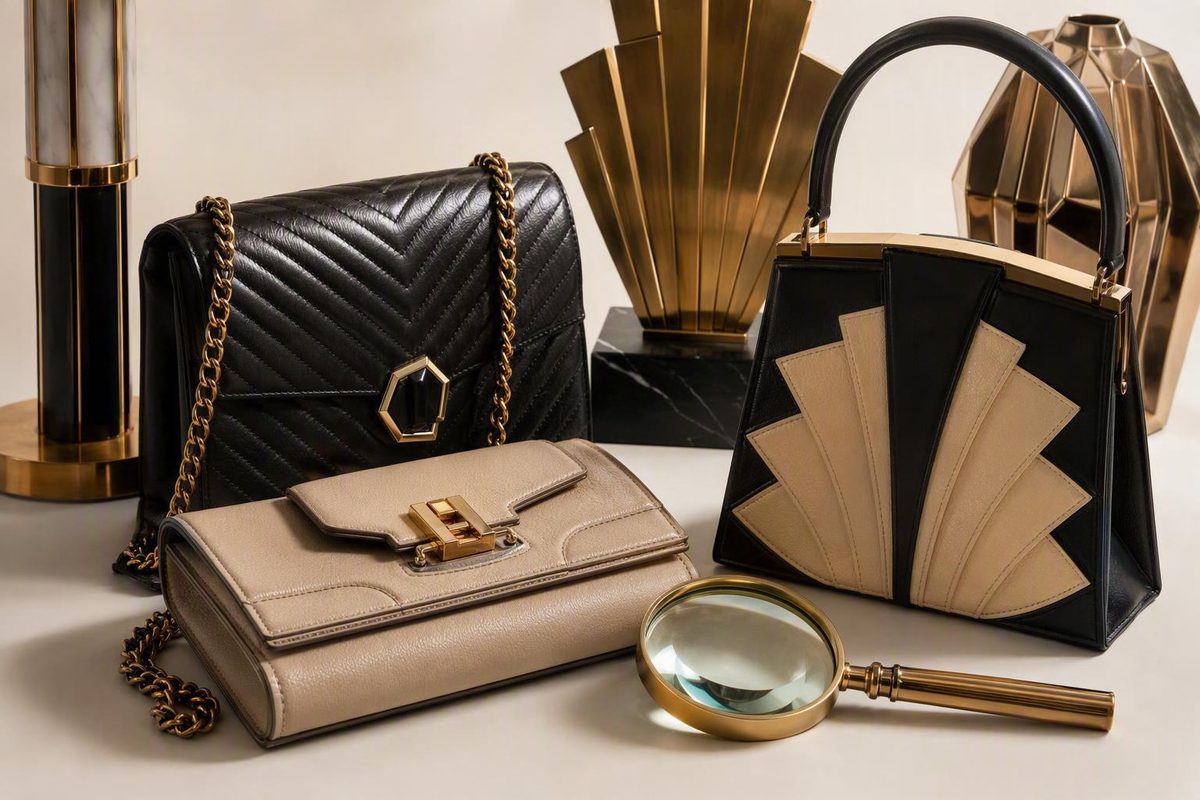
Learning how to spot fake designer items is less about memorizing a few supposed “tells” than about making a disciplined, model-specific comparison. A sophisticated counterfeit may have convincing materials, hardware, codes, documents, and photographs. A genuine vintage item, meanwhile, may be worn, repaired, incomplete, or different from the current version shown on a brand’s website.
This guide is therefore a risk-screening framework, not a definitive brand-authentication manual. Its purpose is to help you identify the item, test the seller’s claims, recognize unresolved evidence, protect the transaction, and decide when an independent specialist is warranted.
Start with the right premise: you are screening risk, not proving authenticity
No single logo, serial number, stitch, receipt, authenticity card, zipper, package, odor, weight, material, or branded component proves that a designer item is genuine.
Modern counterfeits may reproduce plausible serial codes, holograms, hardware, paperwork, and listing photography, which is why visual inspection alone may not settle a difficult case (Tabita Bags’ pre-owned buying guidance). Genuine goods are not always pristine, either. Age, use, storage, restoration, manufacturing variation, and replacement components can all produce details that seem unusual.
Use a staged process instead:
- Identify the exact item. Establish the model, version, approximate production period, dimensions, materials, and colorway.
- Research its production context. Determine what should be present on that particular version—not merely what is typical of the brand.
- Inspect the complete object. Compare its shape, construction, branding, hardware, lining, labels, and codes.
- Assess documents and accessories. Reconcile them with the item without treating them as proof.
- Evaluate the seller and transaction. Consider provenance, communication, listing quality, return terms, and payment protection.
- Escalate unresolved cases. For an expensive purchase or conflicting evidence, obtain an independent professional opinion.
Record findings in three groups:
- Weak warnings: Subjective or nonspecific concerns such as an unusual smell, unexpectedly light weight, untidy packaging, or a low price.
- Stronger inconsistencies: Details that conflict with reliable information about the exact model, version, colorway, or production period.
- Unresolved evidence: Features that cannot be evaluated because photographs are missing, references disagree, repairs may be present, or the exact model has not been identified.
This is more defensible than inventing an authenticity score. There is no universal formula in which a certain number of stitching, packaging, or hardware concerns automatically equals a counterfeit.
Several consistent details can increase confidence. If the dimensions, materials, construction, typography, codes, accessories, and provenance all make sense together, the item presents a more coherent case. Coherence is not an absolute guarantee, however, because a convincing counterfeit is designed to create it.
Keep product evidence separate from transaction safeguards. A return policy or buyer-protection procedure may reduce financial exposure, but it does not authenticate the object. Check the current terms of the particular marketplace and payment provider before paying; do not assume that protection applies to every transaction, payment method, or jurisdiction.
Identify the exact model before inspecting the item
Before studying stitch lines or serial codes, establish what the object claims to be. Many misleading “real versus fake” comparisons place different sizes, seasons, factories, regional releases, or redesigned versions side by side.
Record as much of the following as possible:
- Brand
- Product name
- Model, style, or reference number
- Approximate release or production period
- Size and stated dimensions
- Material and trim
- Colorway or official color name
- Hardware color and finish
- Intended sales region, if relevant
- Claimed place and date of purchase
- Prior ownership
- Repairs or replacement parts
- Included accessories and documents
Prioritize official brand information when it is available. Current or archived product pages, catalogs, campaigns, care information, and written customer-service responses may help establish expected materials, dimensions, colors, logos, construction, model numbers, and accessories. General inspection guidance likewise recommends comparing a suspected item with the brand’s own product information rather than relying only on marketplace listings (EZPAWN’s category overview).
Make sure the official information belongs to the relevant period. A current page may show a redesigned lining, altered dimensions, different hardware, or a new code system for a product whose familiar name has been used for years.
For a discontinued or vintage item, compare multiple references. Potentially useful material includes:
- Dated brand catalogs or archived product pages
- Contemporary advertisements and lookbooks
- Auction records with clear dating and reference information
- Resale records that identify the same model and version
- Collector documentation that distinguishes different releases
- Disclosed brand repair or replacement records
Judge those references rather than accepting them at face value. Prefer records with a traceable date, matching reference number, clear photographs, and disclosed restoration history. An auction or resale listing should not be described as “verified” merely because it was published by an established business.
Do not use one resale image as a master reference. That listing may be misidentified, incorrectly dated, restored, or counterfeit. Look instead for a repeated, coherent set of characteristics across independent examples.
Version-sensitive details may include:
- Lining material and color
- Number, shape, and location of pockets
- Handle profile and attachment method
- Panel proportions
- Hardware finish
- Logo size and placement
- Label construction
- Zipper-pull shape
- Serial or date-code convention
- Country-of-origin wording
- Box, dust bag, case, or spare accessories
Generic material rules are especially unreliable. Designer goods are not universally made from leather; brands may intentionally use canvas, vinyl, vegan leather, denim, coated textiles, and other materials (Brandon Blackwood’s discussion of bag materials). A synthetic surface is relevant only if it conflicts with the specification for the exact item or with the seller’s description.
If you cannot establish the precise model or approximate period, mark the assessment incomplete. Do not borrow a categorical rule from another bag, sneaker release, or accessory and treat the resulting mismatch as proof. The first question is not “Does this look luxurious?” but “Does this make sense as the exact product claimed?”
Inspect the item as a complete construction system
Once you have identified the model, inspect the item in a fixed sequence. A repeatable routine helps prevent an attractive logo, desirable price, or persuasive seller story from controlling the decision.
The following checks are practical screening heuristics. Material feel, stitching, hardware, and typography can reveal inconsistencies, but none has validated diagnostic value across every brand and product.
Begin with shape, proportions, and materials
Compare the overall silhouette before examining tiny details. Check width, height, depth, panel angles, handle drop, frame shape, or other category-appropriate proportions. An object can contain individually plausible components while still having the wrong overall geometry.
Assess the material against the expected specification:
- Is the texture or grain plausible for this version?
- Does the structure match reliable examples?
- Is the finish appropriately matte, glossy, coated, pebbled, brushed, or woven?
- Does the item flex where the design suggests it should?
- Are aging and wear reasonably consistent across adjacent components?
- Is flaking compatible with the claimed material and condition?
A plastic-like surface, excessive stiffness, unusually uniform grain, flaking, or a strong chemical odor can justify more scrutiny. None is decisive. Material choice, coatings, storage, smoke, cleaning products, age, and restoration can all affect appearance, smell, or feel.
Follow the stitching and edge finishing
Trace exterior and interior stitch lines rather than inspecting only the most visible seam. Examine corners, pocket openings, handle attachments, labels, zippers, soles, and lining joins where applicable.
Look for:
- Uneven spacing or wandering lines
- Loose or fraying thread
- Abrupt changes in thread color or thickness
- Inconsistent stitch direction
- Skipped or doubled sections
- Exposed glue
- Rough or unfinished edges
- Poorly folded corners
- Seams that distort the object’s shape
These are warnings, not universal failures. Do not use a fixed stitch-count rule unless it is documented for the exact model, size, material, and period.
Compare logos and typography precisely
Treat branding as typography, not merely as a familiar word. Compare:
- Letterform shape
- Stroke thickness
- Spacing between letters
- Relative height and width
- Spelling and punctuation
- Embossing depth
- Printing or engraving sharpness
- Scale and placement
- Centering and alignment
Use a reliable example of the same version. Brands can change logos, label formats, plate wording, and hardware details between styles or collections. For example, genuine products from a single brand may use different plate wording or omit engraving on particular hardware, illustrating why a missing phrase or mark cannot serve as a universal verdict (BrandsGateway’s examples of model variation).
Check patterns in context
Pattern alignment may be informative, but there is no universal monogram rule. Determine how the exact model was cut and assembled. The design may be centered, mirrored, interrupted by piping, or intentionally offset.
Account for the object’s structure and the photograph itself. Ask whether its placement and orientation are compatible with documented examples of that construction.
Examine the hardware
Compare the color and finish of zippers, rivets, screws, rings, feet, buckles, hinges, clasps, and decorative plates. Then inspect:
- Engraving clarity and location
- Screw and rivet type
- Attachment points
- Plating wear
- Casting quality
- Edge finishing
- Zipper-pull shape
- Clasp or hinge operation
- Alignment when closed
Blurry engraving, sharp casting seams, chipped painted finishes, mismatched metals, or faulty closures warrant attention. So can components that feel unexpectedly flimsy or hollow.
Ask about repairs. Even when the core item is genuine, non-original components or poor restoration may affect condition, desirability, and price.
Inspect the interior with equal care
Examine:
- Lining material and shade
- Pocket layout and depth
- Interior logos
- Labels and their attachment
- Seam finishing
- Zipper tape and pulls
- Backs of closures
- Handle or strap reinforcement
- Codes, holograms, or model tags
- Glue, raw edges, and loose threads
Compare relationships rather than isolated details. Does the lining fit the shell properly? Are the pockets proportionate? Does the interior hardware correspond with the exterior? Do the wear patterns make sense together?
Create a side-by-side checklist or image board instead of relying on memory. Compare one feature at a time: silhouette, material, front branding, rear construction, base, sides, interior, hardware, codes, and accessories. Record whether each feature is consistent, inconsistent, or unresolved.
Treat serial numbers, cards, receipts, and packaging as supporting evidence
Serial numbers and date codes look objective, but their usefulness depends on knowing the correct system for the particular brand, product, and production period.
Some products use serial numbers. Others use date, factory, style, batch, or model codes. An absent code is therefore not automatically suspicious.
When a code is present, ask four questions:
- Is the format plausible? Check its length, character type, separators, and sequence.
- Is the placement correct? Determine where and how the relevant version carried the code.
- Is the execution consistent? Examine the font, spacing, label material, printing or embossing, and attachment.
- Do its implications make sense? The code should not indicate a period, factory, or product type that conflicts with the claimed object.
A plausible sequence may still be copied, invented, or placed incorrectly. Commercial authentication guidance notes that counterfeit goods may include apparently credible codes, so the sequence should be reconciled with the complete item rather than accepted alone (Designer Second Hand Vienna’s guide to codes and labels).
If an authenticity card is present, compare its number and product information with the object. Inspect the card’s typography, printing, dimensions, finish, and expected period format. Even a matching card remains supporting evidence: cards may be forged, transferred from another item, or deliberately paired with a counterfeit.
Apply the same caution to:
- Receipts and gift receipts
- Certificates and holograms
- Dust bags, boxes, and cases
- Tissue paper and ribbons
- Price tags and care booklets
- Barcodes
- Branded zipper components
- Spare parts
- Claims involving RFID or other technology
Packaging discrepancies such as misspellings, fuzzy images, unusual colors, or model information that conflicts with the object are legitimate warnings. They are not automatic verdicts.
Absence is equally easy to overinterpret. A genuine item may have lost its receipt, card, packaging, or detachable accessories. A vintage product may predate a particular code practice, and repairs may remove or replace a tagged component.
Use documentation to construct a provenance trail:
- Who is selling the item?
- When and where was it reportedly purchased?
- Does the document describe the correct model, color, and size?
- Can the dates and ownership history be reconciled?
- Do older photographs appear to show the same object?
- Are repairs, replacement parts, and transfers disclosed?
- Does the seller’s account remain consistent when questioned?
A document is most useful when it connects a specific object to a credible history. It is weakest when presented as a decorative assurance without details that can be reconciled.
Evaluate the listing, price, seller, and transaction separately
A careful physical assessment cannot prevent every form of loss. Stolen photographs, non-delivery, undisclosed damage, and unsafe payment arrangements are transaction problems even when the pictured item appears genuine.
Compare like with like on price
Do not compare the asking price only with original retail. Look for the same:
- Model and size
- Production period
- Material and colorway
- Condition
- Rarity
- Included accessories
- Repair history
- Regional version
Where possible, distinguish current asking prices from completed sales. A steep discount should prompt questions, not an instant declaration that the item is fake. It may also be bait. The relevant question is whether the explanation fits the rest of the evidence.
Examine the seller
Check:
- Verifiable contact information
- Operating history
- Prior-buyer feedback
- Knowledge of the exact product
- Explanation of provenance
- Authentication process
- Return and refund terms
- Claimed business presence
- Willingness to answer specific questions
- Consistency across listings
Read reviews rather than relying only on an average rating. A polished website, active social account, large following, long history, or authentication claim does not prove that a particular object is genuine.
If the seller says the item was authenticated, ask who conducted the examination, what evidence was reviewed, whether the result is in writing, and what limitations were stated. Treat the assertion as information to verify—not as a substitute for examining the item.
Read the listing for internal conflicts
Potential concerns include:
- A vague or incorrect product name
- Contradictory dimensions or materials
- A style number belonging to another product
- Copied or error-filled descriptions
- Stock photographs instead of the actual object
- Unsupported declarations of certainty
- Pressure to move to private messaging
- Refusal to discuss model-specific details
- A provenance story that changes
- Artificial urgency
- Bulk availability of supposedly scarce pieces
Typos or awkward phrasing do not prove counterfeiting. Their significance depends on whether they accompany copied information, weak product knowledge, or contradictions.
Check whether the photographs belong to the seller
Reverse-search the main image and distinctive close-ups. Compare other appearances for:
- Identical backgrounds
- Matching creases, scratches, stains, or wear
- Different seller names or locations
- Conflicting condition descriptions
- Changes in image quality
- Cropping that removes a watermark
Duplicate photographs used by unrelated sellers may indicate recycled or stolen imagery, although they do not establish whether the pictured object itself is authentic (Alvin’s Club’s online-listing guidance). They raise a different question: whether the seller possesses the item being offered.
Protect the payment
Prefer a marketplace or payment method with documented buyer-protection and dispute procedures. Before paying, read the current official terms for the particular service and your jurisdiction, including any exclusions and filing requirements.
Do not assume that a return policy guarantees recovery or that private and off-platform payments retain the same protections as an on-platform transaction. Save the terms shown at the time of purchase.
Walk away if the seller refuses essential evidence, prevents reasonable independent review, insists on an unprotected payment method, or pressures you to bypass the marketplace. A lower price does not compensate for a transaction that leaves the item’s identity unresolved.
Use a precise photo-request checklist for remote purchases
Remote screening depends heavily on the quality and completeness of the images. Ask for photographs of the actual item—not stock photography, promotional material, or images reused from another listing.
You can copy and adapt this request:
Please send unedited, high-resolution photographs of the actual item in natural light, without filters or portrait-mode blur. I need full front, back, both sides, top, and base views, plus close-ups of the exterior and interior logos, labels, codes, model information, hardware, engravings, rivets, screws, zipper pulls, clasps, seams, corners, edges, handles, lining, pockets, and closures. Please show all wear, repairs, stains, scratches, peeling, cracks, or replacement parts. For each code, please provide one image showing its location in context and another close enough to read its format and printing or embossing. Please also send one new photograph of the item beside a handwritten note showing today’s date and the phrase “[agreed phrase].”
Natural light can make texture, finish, discoloration, engraving, and edge treatment easier to assess than dramatic promotional lighting. Request square-on photographs for proportion and angled photographs for surface detail. Commercial pre-owned buying guidance similarly recommends unedited close-ups of stitching, corners, edges, handles, zippers, interiors, serial numbers, logos, and hardware.
The minimum useful set should include:
- Full front and back
- Left and right sides
- Base or outsole
- Top and opening
- A view showing the item’s natural structure
- Exterior logo
- Interior branding
- Manufacturer, size, model, or material tags
- Serial or date code in context
- Close-up of the same code
- Hardware engravings
- Rivets and screws
- Zipper pull and track
- Clasps, hinges, or closures
- Handle and strap attachments
- Exterior and interior stitching
- Corners, edges, piping, and high-contact areas
- Lining and pockets
- Packaging and documents
- Every disclosed flaw or repair
Condition photographs matter because condition and authenticity are separate. Cracked handles, rubbed corners, sticky coatings, stained linings, sole wear, bent frames, or scratched lenses may reduce value without proving counterfeiting. Hidden defects still create a condition-disclosure concern.
For coded components, request context and detail. A tight crop may make a label look convincing while concealing that it is in the wrong location or attached incorrectly. The wider image shows placement; the close-up permits examination of the format and execution.
A new photograph beside an agreed handwritten phrase is a practical possession check.
Before paying, save:
- The complete listing
- Original-resolution images where available
- Product description
- Seller profile and contact details
- Messages and answers
- Authentication claims
- Stated condition
- Return terms
- Applicable buyer-protection terms
- Invoice and payment record
Treat refusal to provide useful images as transaction risk. The same applies to unexplained background changes, inconsistent wear, hardware that changes appearance between photographs, or crops that repeatedly exclude requested areas. Because lighting can create apparent differences, ask for clarification before drawing a conclusion.
Adjust the checklist for bags, sneakers, and sunglasses
The layered process applies across categories, but the details below are only high-level screening considerations. The available evidence is strongest for handbags and does not establish definitive category-specific tests for sneakers or eyewear.
Handbags
For handbags, prioritize:
- Overall silhouette and dimensions
- Panel shape and symmetry
- Handle profile and drop
- Handle and strap attachments
- Pocket number and placement
- Lining material and color
- Seam construction
- Edge paint or piping
- Closure design
- Hardware consistency
- Exterior and interior logos
- Model-appropriate labels and codes
Consider how the parts relate. A plausible logo attached to a shell with incompatible panel angles or pocket geometry is weak evidence. Expected materials and hardware also mean little if the model was not offered in the represented combination.
Distinguish aging from inconsistency. Patina, rubbed corners, tarnishing, stretched handle bases, and lining wear may be compatible with an older bag. New-looking hardware on an otherwise worn object may reflect a legitimate repair, but it requires an explanation.
Sneakers
First identify the exact release, size, and colorway. Broadly similar releases may use different materials, labels, packaging, or construction.
At a screening level, compare:
- Overall silhouette and panel arrangement
- Materials and colors
- Stitching and edge finishing
- Tongue or interior tags
- Size and production information
- UPC information where applicable
- Box label and included accessories
- Price relative to the same release, size, condition, and completeness
Tags, UPC codes, boxes, and accessories can be copied or swapped. Reconcile them with the physical pair rather than treating them as proof. Guidance covering designer sneakers recommends checking release information, interior tags, materials, stitching, and market price, while also acknowledging that such checks are not foolproof.
Avoid relying on smell as a decision rule. Adhesives, storage, cleaning, age, humidity, wear, and packaging may all affect odor.
Sunglasses
For sunglasses, begin with:
- Frame shape and stated dimensions
- Lens profile and color
- Brand, model, and size information inside the temple where applicable
- Typography and spacing
- Temple logos
- Hinges and screws
- Frame finish
- Lens markings
- Alignment when opened and folded
- Case, cloth, box, barcode, and documents
Model information can help locate the expected frame dimensions and color combination, but the marking itself remains copyable. A code describing a different frame or lens color is a more meaningful inconsistency than an unfamiliar-looking detail considered without a reliable comparison.
Consider the claimed condition and whether the seller disclosed alterations.
Keep sensory clues secondary
Smell, weight, texture, flexibility, and hardware sound may help you notice a discrepancy, but they should not control the decision. Age, storage, treatment, size, material choice, repair, and condition can all alter sensory impressions.
Tags, model numbers, barcodes, packaging, and paperwork are also copyable. Their value comes from agreement with the construction and history of the object—not from their mere presence.
This general guide should not be used to authenticate jewelry, watches, precious metals, or gemstones. Seek an appropriately qualified specialist rather than extending handbag heuristics to materially different objects.
Know when to pause, authenticate, return, or report
Pause the transaction when:
- The exact model or version cannot be identified
- Important photographs are missing
- A code conflicts with the claimed period
- Packaging or paperwork describes another product
- Several construction details depart from consistent references
- Repair or replacement history is unclear
- The seller’s story changes
- Images appear to have been copied
- Protected payment or reasonable scrutiny is refused
Pausing does not mean declaring the item fake. It means the available evidence is insufficient to justify the purchase.
Independent professional authentication is a reasonable next step for an expensive item, a sophisticated-counterfeit risk, unresolved model-specific inconsistencies, or a situation in which a written conclusion may be useful. This is an escalation of the screening process, not a guarantee of certainty.
Before selecting a service, ask:
- Which brands and product categories does it cover?
- Does it cover the relevant model and period?
- What photographs or physical evidence does it require?
- Does it account for repairs and replacement parts?
- Does it disclose limitations?
- Can the result be inconclusive?
- Is the outcome supplied in writing?
- What exactly does the written outcome state?
Do not assume that any human examiner, automated system, or image-based service is infallible. The value of an opinion depends on relevant category coverage, the evidence submitted, disclosed limitations, and the clarity of the result.
Keep condition, restoration, and authenticity separate. Those issues may affect value without making the underlying object counterfeit.
If you have already received an item that you suspect is fake, stop altering it while the matter is unresolved. Do not clean, repair, dismantle, personalize, or resell it. Preserve:
- The original listing
- All photographs
- Seller messages
- Payment records and invoice
- Packaging
- Shipping label and tracking information
- Unboxing photographs or video, if available
- Detailed photographs of the disputed features
- Any written authentication outcome
Contact the seller promptly under the stated return terms. Keep the communication factual: identify the item, transaction date, specific inconsistencies, and requested remedy. Follow the marketplace or payment provider’s current official process.
Suspected counterfeit listings may also be reported to the marketplace and affected brand. In the United States, anti-fraud guidance identifies the National Intellectual Property Rights Coordination Center as an additional reporting route (ICW Group’s counterfeit-reporting guidance).
Legal rules differ by jurisdiction. In the United States, Customs and Border Protection states that importing counterfeit or pirated merchandise is unlawful; buyers in other countries should consult the rules that apply where they live or where the goods are being imported (U.S. Customs and Border Protection’s counterfeit-goods guidance).
Can a designer item have a serial number and still be fake?
Yes. A counterfeit can carry a copied, invented, or plausible-looking serial number, date code, hologram, or model label. The sequence may even follow a recognizable format.
Evaluate the code’s format, location, typography, attachment, and production implications against the exact model and period. Compare it with any card or paperwork, but do not treat agreement as proof: documents may be forged or transferred.
A code becomes useful when it fits a broader body of model-specific evidence. It is not a standalone authenticity certificate.
Can a genuine designer item be missing its receipt, card, packaging, or date code?
Yes. Vintage products may predate a particular card or coding convention, and some products do not use date codes.
Treat absence as a gap in provenance, not automatic proof of counterfeiting. The gap may make the item harder to assess or affect resale value, but the object should still be examined against model-specific evidence.
Conversely, the presence of a receipt, box, card, or dust bag does not settle the question because accessories and documents can be copied, transferred, or mixed with another item.
Is a very low price enough to prove that a designer item is counterfeit?
No. An unusually low price is a warning that deserves investigation, not proof.
Compare the asking price with the same model, period, material, color, condition, rarity, size, and level of completeness. Damage, missing accessories, weak demand, or poor presentation may explain a discount. A fraudulent listing may also use a low price to encourage a hurried decision.
Price becomes more concerning when it appears alongside copied images, vague product knowledge, missing close-ups, contradictions, and an unprotected payment request.
What should I do if an online seller refuses to provide close-up photographs?
Ask once more with a precise, reasonable list. Request natural-light photographs of the actual item, including its logos, labels, codes, hardware, stitching, lining, wear points, and category-specific features. If possession is uncertain, request a new photograph beside an agreed handwritten phrase.
A seller may have practical limits when an item is stored in a warehouse or held on consignment. Even so, you should not buy what you cannot adequately evaluate. If essential areas remain hidden, the item’s identity and condition remain unresolved.
Refusal is particularly concerning when accompanied by pressure, inconsistent images, private payment requests, or restrictive return terms. Pause or walk away rather than filling the evidence gap with trust.
When should I pay for professional authentication?
Consider independent authentication when the purchase is expensive, the model is frequently counterfeited, the item is vintage or version-sensitive, references conflict, repairs complicate inspection, or the seller’s evidence does not resolve important inconsistencies.
Choose a service that clearly covers the relevant brand, category, model, and period. Ask what evidence it examines, what limitations apply, whether an inconclusive result is possible, and whether the conclusion is provided in writing.
The final decision rule is simple: proceed only when the exact product is identifiable, its details are consistent with model-specific references, the seller supplies adequate evidence, and the transaction offers reasonable protection. Pause or walk away when evidence conflicts, photographs are withheld, or payment is unprotected. For an expensive or unresolved item, obtain independent authentication rather than relying on a supposed instant tell.