
Queen Mary 2’s Art Deco Renovation: What the 2027 Refit Means
What Cunard’s 2027 Queen Mary 2 renovation will change, how it follows the 2016 remastering, and why its Art Deco identity is a modern revival.
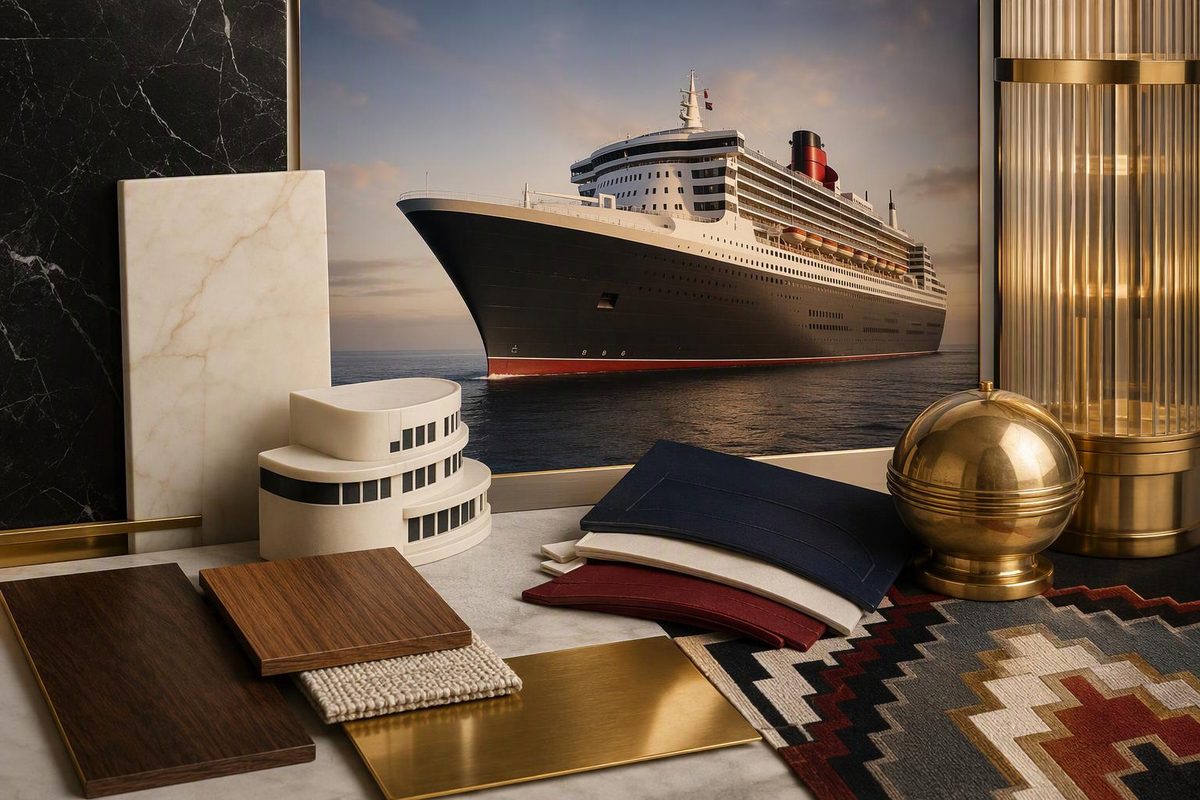
Chris Finch, one of Queen Mary 2’s original designers, is leading the design vision for her next refurbishment. Cunard’s brief is continuity rather than reinvention: refreshed interiors drawing on classic Hollywood glamour and British tradition, while preserving what the operator calls the ship’s “distinctive Art Deco identity.” Cunard’s September 2026 announcement schedules dry dock at Damen Shiprepair Brest in France from March 31, 2027, with a return to service on May 9, 2027.
For design-history readers, the key distinction is that this is a refurbishment of a modern Deco-influenced liner, not a restoration of an interwar Art Deco ship. Queen Mary 2 was built in the twenty-first century; Cunard records construction beginning in 2002. Her historical references should not be confused with the age of her interiors. Cunard’s ship history establishes that chronology.
What will change in 2027?
As of November 2, 2026, the work remains planned, not completed. Cunard has announced these principal interior changes:
- 31 additional staterooms: 16 Princess Grill Suites and 15 Britannia-category rooms.
- All existing Grill Suites refreshed: new interiors, furnishings and finishes, plus redesigned bathrooms across the Grill Suite categories.
- Queens Grill and Princess Grill restaurants refreshed.
- Mareel Wellness & Beauty transformed, alongside a new collection of shops.
- Illuminations digitally upgraded, improving the planetarium’s immersive entertainment capabilities.
These are the stated project elements in Cunard’s refurbishment release. The operator’s current refit page also specifies updates to a selection, rather than all, Britannia and Britannia Club staterooms, including soft furnishings, decorative touches and redesigned bathrooms.
The announcements establish the scope, but not a complete decorative specification. “Preserving Art Deco identity” does not, by itself, tell us which veneers, metal finishes, lighting designs or geometric patterns will be retained or introduced.
The earlier Deco renovation: 2016 “Remastered”
The 2027 project is separate from Queen Mary 2’s extensive 2016 remastering. That earlier refurbishment made its historical design references particularly explicit.
In its September 2015 appointment of London-based SMC Design, Cunard said the forthcoming work would update the ship’s Art Deco lines and introduce classic Deco touches. It named the original Queen Mary as an inspiration, describing an effort to bring Cunard’s decorative past into the twenty-first century. The proposed palette paired traditional Cunard colours with more neutral tones, accompanied by new carpets, furniture, fixtures and fittings. SMC managing director Andrew Collier emphasized clean lines, simple designs and understated elegance. The original design announcement documents that intention.
A contemporary Seatrade Cruise News report from the shipyard describes the work in progress and intended changes: the Winter Garden becoming the Carinthia Lounge, a reconfigured Kings Court buffet, a new-look Grand Lobby, and new colour schemes and furnishings in the Grill restaurants. The scope went well beyond repair of existing decoration.
How to read the new Art Deco claims
The most useful description of Queen Mary 2 is modern Art Deco-influenced design with documented references to Cunard’s earlier liners. That wording separates three things often collapsed into “heritage”: the company’s history, the ship’s own design history, and the historical style being invoked.
For the 2027 scheme, Cunard has commissioned illustrator Tanu Vasu to convey its vision. The operator describes her work as an artistic interpretation of the intended atmosphere. Those illustrations are therefore evidence of design direction—not photographs of finished rooms or a schedule of installed materials. Cunard’s announcement makes that role clear.
When completed-room photographs become available, compare the furniture profiles, repeated geometry, lighting and material contrasts with the pre-refit interiors. Those details will show how the promised continuity has been achieved. Until then, the documented commitment is to retain Queen Mary 2’s recognizable Deco-influenced character while renewing accommodation and guest spaces—not to recreate an entire 1930s interior.